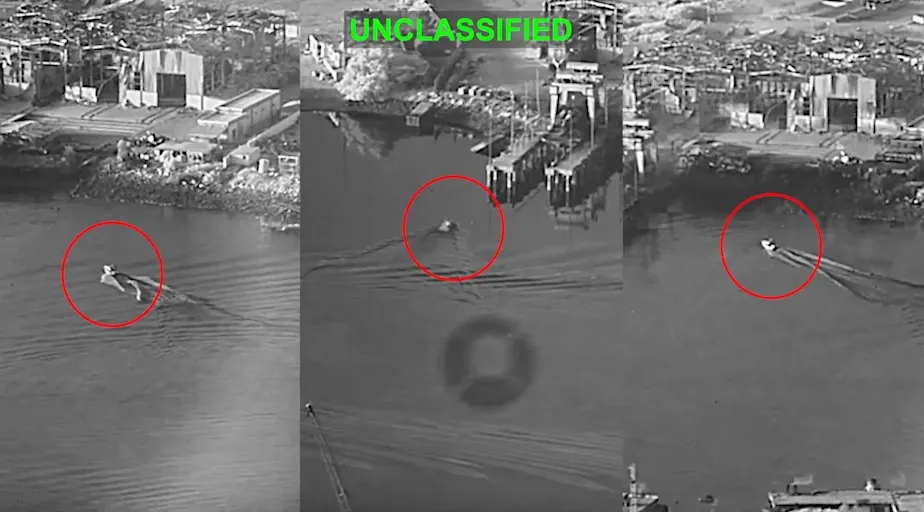
Taking stock of the campaigns surrounding Iran and Cuba that Trump launched, the conclusion is quite simple. On the surface, America appears to be in good military shape, but its industry and pampered society are letting it down.
Modern military conflict is a competition between industrial systems. It has always been this way; we simply forgot about it after the Cold War. For a long time, the U.S. maintained total superiority thanks to expensive and highly effective technologies. The U.S. military could easily paralyze the enemy by destroying its command-and-control system, preventing it from fighting on equal terms.
Now, war has entered the era of social media footage, drones, and cheap missile substitutes. The U.S. finds itself facing a problem. It cannot sustain a high-intensity conflict for long, and, most importantly, it is highly sensitive to footage on social media and television. The defense industry is failing to replenish stocks of expensive weapons as needed, and this is becoming a political, social, and ultimately military constraint.
The next problem is even more serious. The U.S. is not prepared to risk a ground invasion and heavy casualties. The sociopolitical risks are too high. America is becoming a paralyzed nation: it has a massive, extremely expensive military (but lacks resilience to casualties); it has the capabilities and the equipment, but applying all of this in a real conflict is becoming unrealistic.
U.S. forces number 2.12 million. But they were unable to assemble ground invasion forces for Iran, and deploying the army in a war against modern drones is terrifying. The casualties would be immediately apparent. Images of destroyed equipment and fallen soldiers would be psychologically traumatic for society and politically devastating for the administration.
As a result, the U.S. is becoming increasingly dependent on precision-strike weapons. They are accurate, powerful, and expensive, but there is a catastrophic shortage of them. American industry does not produce them in sufficient quantities for a prolonged, high-intensity conflict.
Conclusion: The U.S. economy is approximately 80 to 100 times larger than Iran’s, and in terms of GDP per capita, the U.S. exceeds Iran by more than 10 to 15 times. Iran’s regular army numbers about 600,000. The outcome is grim for the U.S. …